
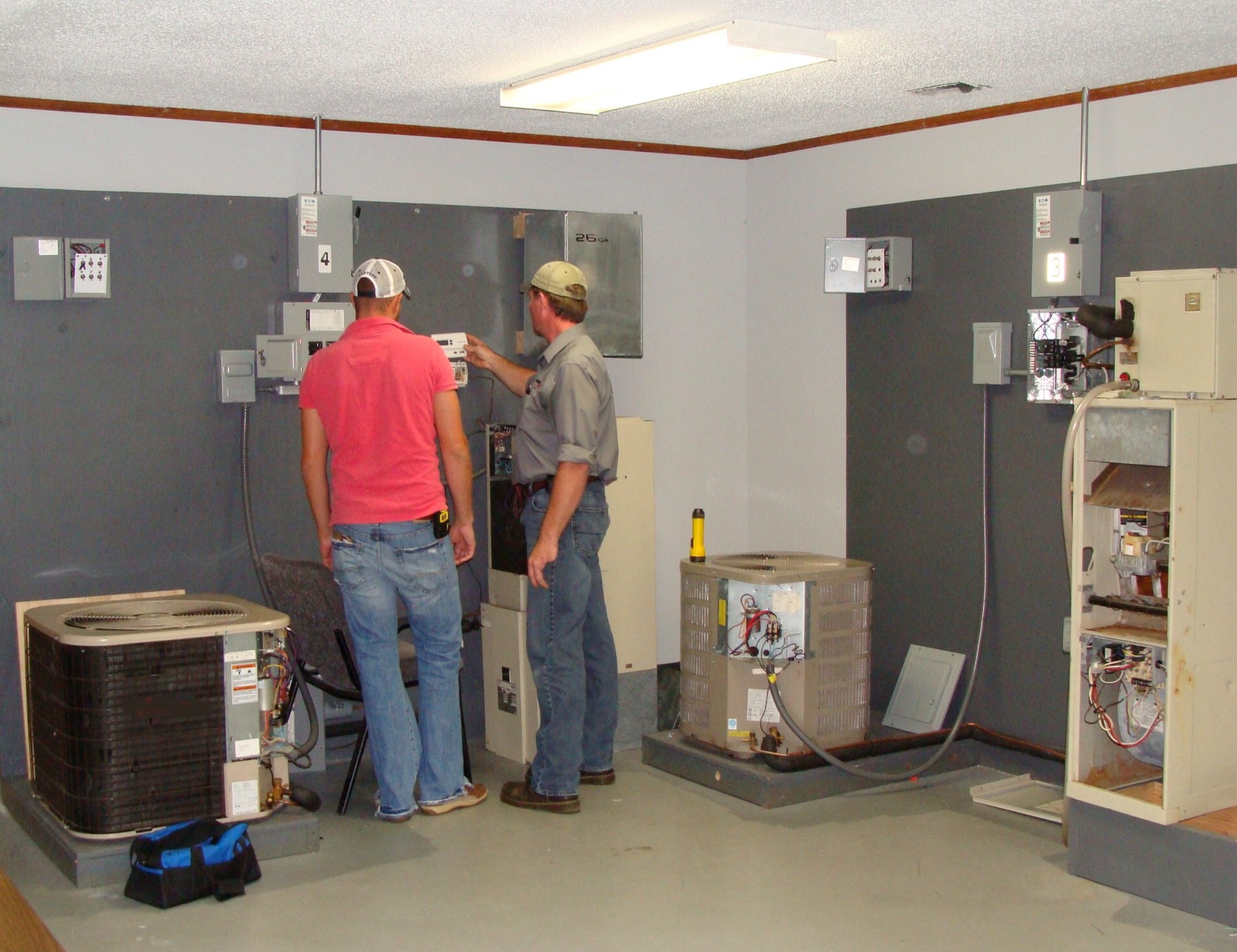
Four technicians, one classroom
Students work individually on lab projects designed so each one progresses at their own rate — which is why four very different technicians can sit in the same week-long course and all get what they came for.
-
Little or no experience
New technicians
A person with a good attitude and good customer communication skills has a great opportunity in this industry. Combine basic mechanical skills with UTA courses and a little on-the-job training, and a new technician can be up and running in no time.
- Installation assistant
- Maintenance technician
- Light service calls
-
Apprentices and assistants
Moving up the ladder
Your best service techs and lead installers usually come from within. When it is time for another service tech or lead installer, look at your apprentice installers and maintenance techs and send them for the jump start they need.
- Assistant → maintenance tech
- Assistant → lead installer
- Maintenance → diagnostic tech
-
Stuck in one or two areas
Frustrated technicians
Techs who struggle in a specific area — electrical diagnostics, say — get frustrated over time because they want to solve the problem quickly and get it right the first time. Everyone loses when a call takes too long: the customer, the tech and the company.
- Fewer repeat trips
- Faster diagnostics
- Less warranty and recall cost
-
Good day to day, want sharper
Experienced technicians
Existing maintenance techs, service techs and lead installers who do a good job but want to improve diagnostics and system performance see a productivity increase. This group gets overlooked precisely because they bring in revenue every day.
- Complex diagnostics
- Duct and airflow issues
- Higher service ticket average
Cross-training counts too
UTA also cross-trains experienced techs in other trades within a company — plumbers and electricians moving into HVAC work, and HVAC techs picking up plumbing or electrical service. In a week or two we have helped experienced technicians unlock what was holding them back.