Building blocks, not just tasks
A lot of schools are segment based, but they spend two or three semesters accomplishing what UTA accomplishes in a few weeks. The difference is what a technician is left holding afterward.
Task based
Learn the steps
The technician learns the steps necessary to perform a certain task or group of tasks. Productive sooner — but there is not enough time in a task-based program to cover the basics of why the tasks are done the way they are.
- Productive in a shorter time period
- No foundational knowledge to fall back on
- Struggles when a call gets complicated
Segment based — how UTA teaches
Learn the building blocks
Learn refrigeration completely — the cycle, charging, troubleshooting, brazing, evacuation and recovery — and it applies to service, maintenance and installation alike.
- Start-up may take slightly longer
- Progresses far faster afterward
- A much more well-rounded technician
Worked example
A technician who attends only a task-based class on installing an HVAC system learns the basic skills for an installation. They would not learn service troubleshooting — even though there will be times it is needed on an installation — or maintenance, even though the company will need an installer to do it.
The same technician in a segment-based program attends basic refrigeration and learns the cycle completely, then attends electrical and learns the theory of electricity, proper wiring, safety and components. They can now perform those tasks across service, maintenance and installation.
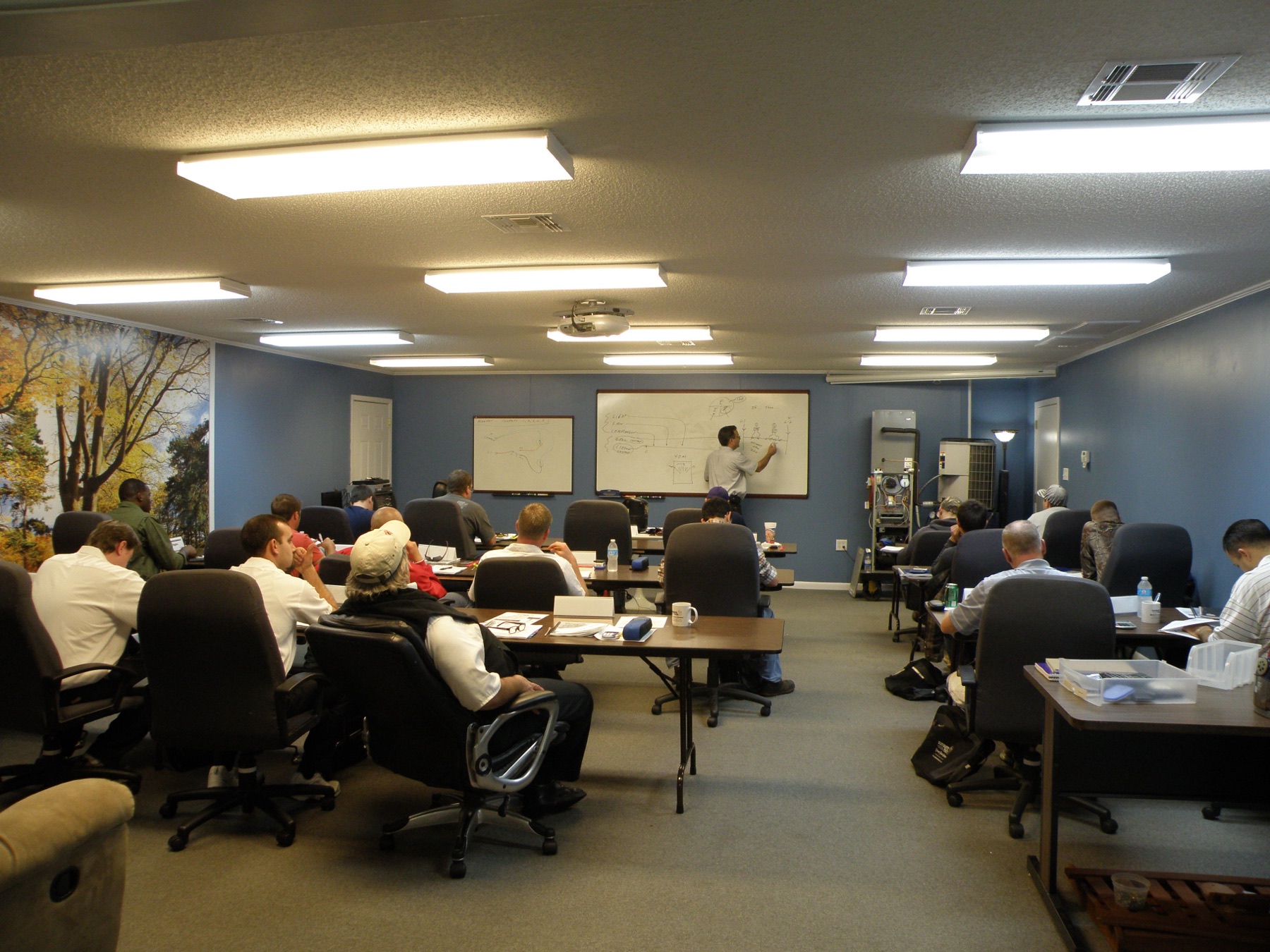
Three segments — Electrical, Refrigeration, Heating — and your hire can run maintenance.
See the courses